EWA Verimlilik Su Teknolojileri A.Ş.

Efficiency engineering for water transfer systems

We provide engineering, field automation and central monitoring to raise water and energy efficiency at wells, pumping stations, reservoirs and networks. In Niğde, monthly electricity consumption fell by 36% for the same volume of water.

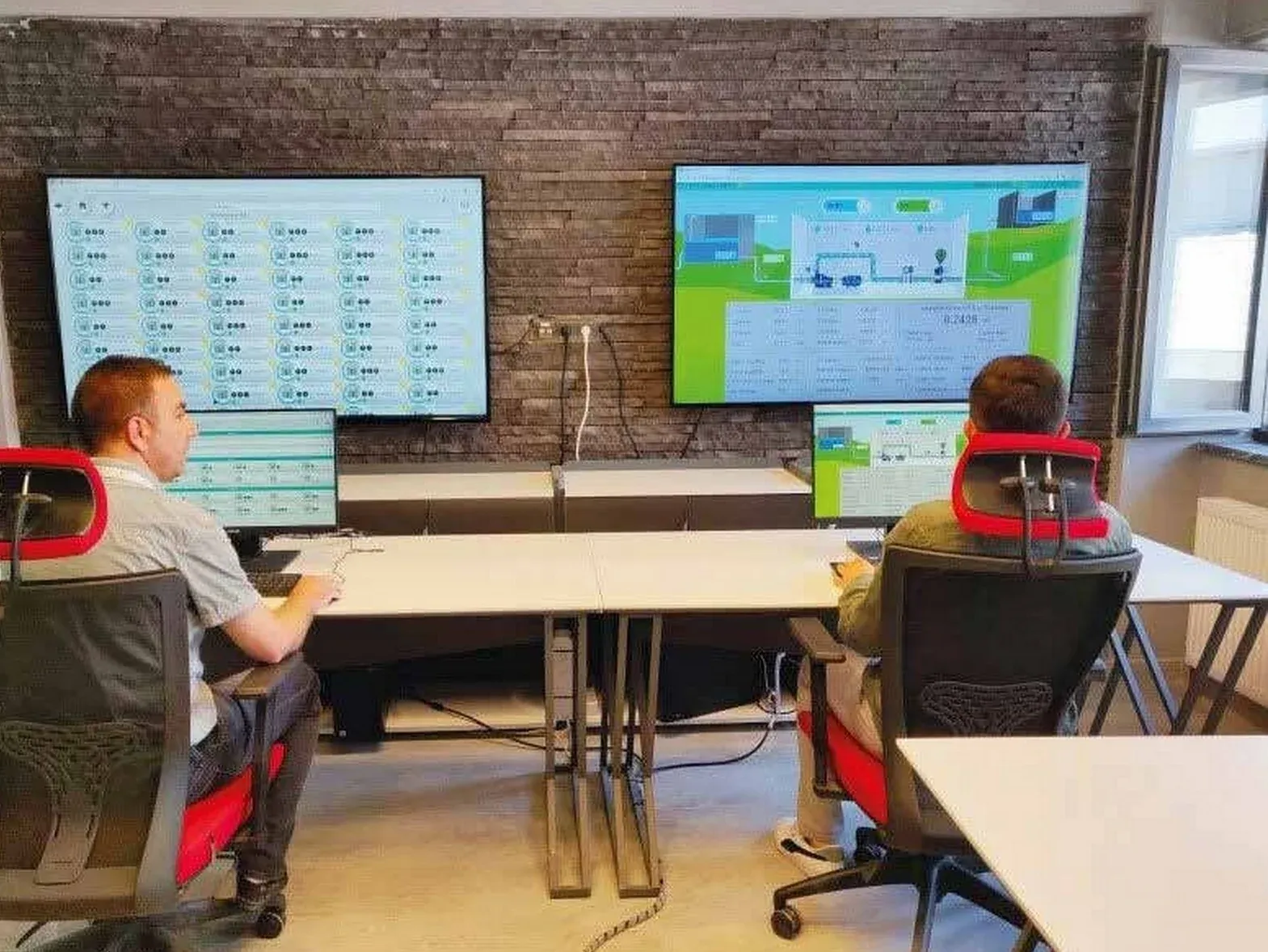
Two operators monitoring stations on the wall displays in the central control room of the Niğde project

Work that starts with measurement and continues into operation

Every stage, from abstracting water at the source through consumption and treatment to its return to the source, should be measurable and manageable.

Water conveyance systems grow more complex as they expand. Wells, pumping stations and mains that are not upgraded with new technology lose both water and energy. We tackle these losses at every scale, from large city networks to a single pumping station.

The work begins with measurements at wells and pumping stations. Engineers plan the improvements to pump and control systems from these measurements; where needed, pumps, motors, valves, fittings and pipe connections are replaced on a turnkey basis. The operations team monitors water production and energy consumption in Predixi WIS.

  • Analysis with Aqua GuideEquipment inventory, flow, pressure and energy measurements are gathered in the same field record, revealing the current situation and the options for improvement.
  • Field control with MetiriusSensors, drives and pump sets are managed by local automation so that they deliver the water needed under suitable operating conditions.
  • Central monitoringPredixi WIS brings together water and energy indicators at network and station level. Predixi IO binds equipment signals to process screens built for the plant.
Energy analyser case opened beside a pump motor: a baseline measurement in the field

The plant’s needs set the scope

Engineering only, turnkey delivery, or long-term operation with shared savings: three models, single project responsibility.

  • From survey to SCADA integration

    Technology and engineering

    The work starts with a site assessment and feasibility study and continues, within the same project, through pump selection, mechanical rehabilitation, electrical panels, automation and SCADA integration.

  • From commissioning to maintenance

    Turnkey delivery and operation

    The scope of commissioning, training and maintenance is set to suit the need. In long-term operation, maintenance, fault tracking and performance management can be carried out together.

  • Investment based on measured savings

    Savings sharing

    On suitable projects, EWA can take on the initial investment. The return on that investment rests on sharing the energy savings measured during operation, as set out in the contract. Financing, responsibilities and sharing ratios are settled in the feasibility study; Metirius supports the savings calculation and invoicing under the agreed model.

The six steps of a project

Success indicators and acceptance criteria are defined before implementation; the result is tracked against the baseline period.

  1. 01

    Site inventory and baseline measurement

    Wells, pumps, motors, drives and reservoirs are inventoried. Flow, pressure, pump head, energy and run times are measured.

  2. 02

    Technical and economic feasibility

    Pump operating points and system losses are analysed. For each rehabilitation scenario, the investment, the expected savings and the payback period are calculated.

  3. 03

    Design and scope of work

    Mechanical improvements, panels, sensor locations, communication and SCADA connections are designed. The measurement boundary, success indicators and acceptance criteria are agreed together.

  4. 04

    Installation and integration

    Field automation is installed while pumps, motors and drives are upgraded. Metirius field control and the central monitoring infrastructure are integrated to suit the plant’s conditions.

  5. 05

    Testing, training and acceptance

    Measurement accuracy, alarm scenarios, remote control and communication are tested. Operators are trained on the screens, alarm handling and basic intervention.

  6. 06

    Monitoring and continuous improvement

    Operating data are compared with the baseline period. The causes of any loss of performance are investigated using maintenance and fault records; the necessary adjustments are made within the scope of the contract.

Technology collaborations and a global brand portfolio

Through our technology and supply collaborations we bring together the components each project needs. The flexible architecture of Metirius combines drive, control, measurement and communication solutions from international manufacturers under one field management system.

Strong technology collaborations in Metirius

Among the Metirius field components, level sensors, pressure transmitters and electromagnetic flow meters monitor wells, reservoirs and lines, while temperature and vibration sensors watch over pumps and motors. The PLC runs the control scenarios, the variable-frequency drive sets motor speed and the HMI screen provides local monitoring and operator intervention. The energy analyser measures consumption and the modem transfers the data to the central system.

  • Danfoss

    Drives · pump speed control

  • Schneider Electric

    PLC and energy metering · automation and monitoring

  • Beijer Electronics

    HMI operator panels · local control interface

  • Teltonika

    Industrial communication · 4G remote connection

Pump brands

We select pumps by flow, head, water quality and ambient conditions, choosing the options that suit each project’s water transfer and pressure boosting duty.

  • Grundfos

  • KSB

  • Sulzer

Measurement and sensor brands

A flexible brand portfolio built on product models that meet international standards strengthens access to supply and service in different regions.

  • Endress+Hauser

    Flow and level measurement

  • KROHNE

    Flow measurement

  • WIKA

    Pressure and level measurement

We base component selection on the relevant IEC/EN standards and verify quality and safety with the product documentation and declarations of conformity of the selected models. The manufacturers’ global sales, distributor and service networks make technical support and spare parts easier to obtain in different countries. We adapt the choice of brand and model to the project requirements, site conditions and local supply options.

The same goal in cities, industry and agriculture

Delivering the water needed, at the pressure needed, with the least energy. We address continuity of water transfer, energy efficiency and operational control together, according to each plant’s needs.

  • Water supply and network balance

    Urban water infrastructure

    Flow, pressure and reservoir level are monitored together. Water supply is managed to match demand, reducing overflows and unnecessary pumping.

  • Process continuity

    Industry and energy

    The pressure and flow that production needs are maintained for boiler feedwater, process water and cooling water; pump sets use energy more efficiently and operate more reliably.

  • Controlled water distribution

    Irrigation and agriculture

    In irrigation unions and cooperatives, water distribution is planned and monitored remotely. Energy consumption is assessed together with the volume of water delivered.

Savings are measured, carbon is calculated

Sustainability is a goal tracked in every project.

Energy wasted in pump systems translates directly into carbon emissions. Field devices measure the values that affect efficiency and use these measurements to find the pump’s efficient operating point automatically. When energy consumption falls, electricity costs and energy-related carbon emissions can fall too. The change in water losses is measured separately through the water balance.

A project’s return is measured by comparing the same service conditions: the baseline period and the post-implementation period are matched, taking water volume, pump head, operating time and changing demand into account.

  • Energy efficiencyTotal kWh, kWh/m³ and pump operating point.
  • Water savingsWater balance, m³/day and loss rate.
  • Labour productivityResponse time, site visits and fault duration.
  • Operating costsMaintenance, energy and total service cost per cubic metre.
  • Carbon reductionReduced electricity consumption × the emission factor for the period concerned.
A rehabilitated control panel with its door open: variable-frequency drive and automation components

Project development portfolio

Field measurement, energy audits, feasibility studies and proposals for municipalities and industrial companies.

cities worked in
16
municipalities where measurements were carried out
13
municipalities with project development under way
15
private industrial companies
8
municipalities with completed technical and financial feasibility
8
municipalities that received a technical and commercial proposal
5

Figures are from the period in which the reference catalogue was published; stages may overlap. Completed projects and their results are on the Projects page.

Team and R&D

Software, field and operations teams work on the same project, and R&D is driven by the field.

The core team consists of sales and business development, software and R&D, field operations, and administrative and financial affairs. It expands with specialist engineers and subcontractors according to the scale of the project. The software, field integration and operations teams work together, and coordination extends to performance tracking after implementation.

Our R&D is driven by the field: a need identified in operation leads to development, development leads to implementation, and implementation generates new feedback. The savings-sharing business model helps keep this cycle going.

  • Long-term dataKeeping station measurements for years makes past operating behaviour open to assessment.
  • AI-assisted decision supportAnalyses of demand, water losses, pump performance and maintenance priority are being evaluated.
  • Early maintenanceSystem health is monitored, and maintenance preparation starts before a problem grows.
  • On-premises operationClosed-system options with a local AI model and an in-house data centre.
  • Training and supportTechnology is brought into everyday work, and expertise builds up within the organisation.
Three Metirius control cabinets renewed in the Niğde project

Secure, continuous operation

Water infrastructure is critical infrastructure. Rules for access, networks, logging and backup are defined at the start of the project.

  • Information security

    Access and authorisation

    Access rights are defined by user role and scope of duties. Remote connections are made over secure communication; multi-factor authentication is used on suitable components.

  • Information security

    Protecting field and management networks

    Network segmentation, firewalls and controlled remote access protect operational systems. User and device access is reviewed regularly.

  • Information security

    Traceability and updates

    User actions, alarms and event logs are kept available for review. Software updates and access changes are managed through processes that protect operational continuity.

  • Operational continuity

    Redundant infrastructure

    High availability can be designed for server, network and power components: multiple physical servers, redundant communication, firewalls and an uninterruptible power supply.

  • Data protection

    Backup and recovery

    Periodic backups are supported by copies kept off-site and offline. Restore time and data integrity are also tested regularly.

  • Operational continuity

    Clear responsibilities

    Data retention periods, incident response, maintenance windows and recovery objectives are set at the start of the project. Operating scenarios are prepared for loss of connection between the field and the centre.

Management system standards

Information security, energy and quality

  • ISO/IEC 27001:2022

    Information security management

  • ISO 50001:2018

    Energy management

  • ISO 9001:2015

    Quality management

Award-winning energy efficiency projects

Efficiency work on pump systems received awards at the Sustainable Business Awards in 2023 and 2024.

Let’s define your project scope together, from measurement to operation.

Let’s talk about your plant’s current consumption and your targets. The first step is to take the baseline measurements together.